

Sustainability
Protecting the Madu Ganga While You Explore It
Responsible Madu River Safari
Why it matters?
The mangroves, the birds and the quiet channels are the reason you are here, and they are our livelihood too.
This page explains what we do on the water to look after them, and how your visit helps the people who live around the river.


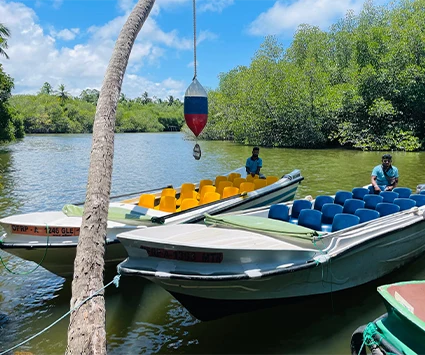
Our Approach to the Madu Ganga
The Madu Ganga is a river, a lagoon and a maze of mangrove islands all at once, and the wetland has been recognised internationally for its importance. For the families living along its banks, it is also a place to fish, farm cinnamon and earn a living.
As a local boat safari operator, we spend every day on this water, so we see quickly when something is wrong. That makes looking after it our job as much as anyone’s. We take guests out because we want people to love this place, and we run our tours so the river is still healthy when the next boat arrives.
Our rule is simple: visitors can get close enough to enjoy the river, but never so close that they change it.
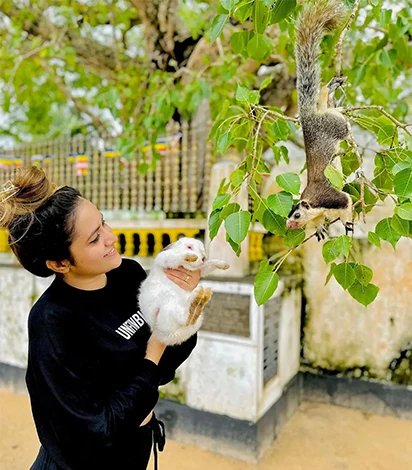
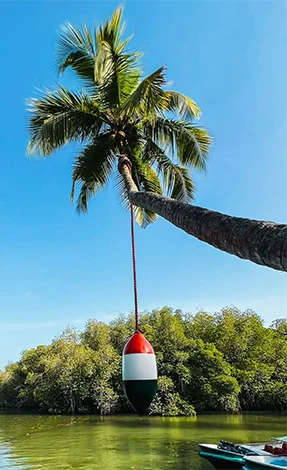

Protecting the Mangroves
When you slide through a tunnel of mangrove roots and see a kingfisher or a heron, that moment depends on the roots staying healthy. Healthy mangroves also protect the riverbank from erosion and support the fish that local families catch.
Our guides explain this on the water. By the end of the trip you will know what you are looking at and why we ask for a quiet, careful ride through it.
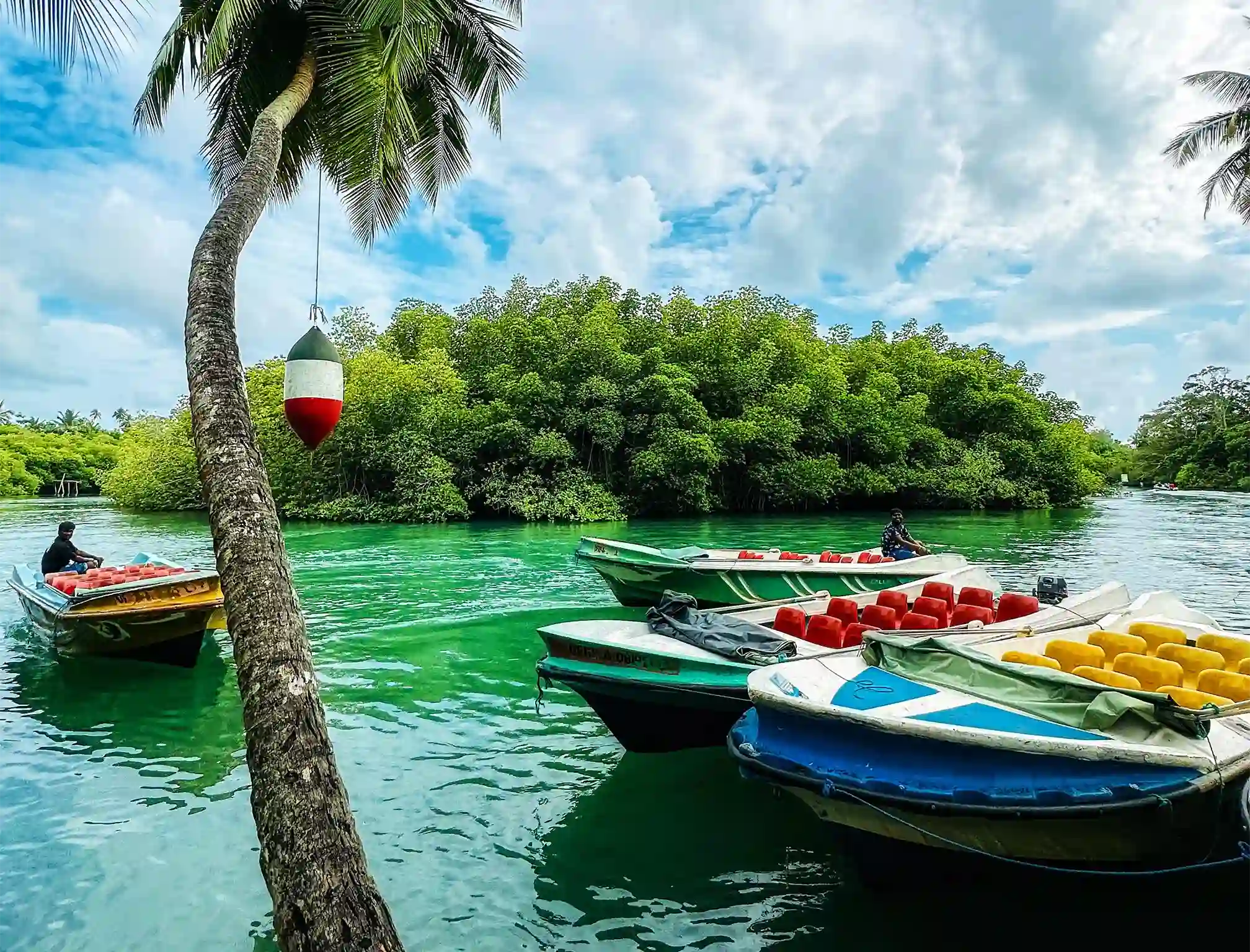
The heart of the river
Why it matters to you
Mangroves are what make the Madu Ganga what it is. Their roots hold the banks together, shelter young fish and prawns, and give birds and reptiles a place to live. Once they are damaged, they take a very long time to come back. So this is where we are strictest.
- We never cut or damage mangroves, and we do not let guests break branches or pull at roots.
- Our boats stay in waterways that are wide and deep enough for them, so the hulls and wash do not scrape the roots.
- Riders avoid unnecessary disturbance around mangrove areas, slowing down or stopping rather than pushing through.
- We respect natural habitats, including nesting spots, and steer clear of them.
Every boat is built under the supervision of marine engineers and specialists, and carries an expandable canopy for sun and rain.
Wildlife & birds
Wildlife & Bird Protection
The Madu Ganga is home to plenty of wildlife, and most of it is easy to miss if you are loud or in a hurry. On a typical safari, guests may come across: Herons & egrets, kingfishers, monitor lizards, crocodiles, river fish, other wetland wildlife.
These are wild animals living their normal lives, so sightings are never guaranteed. What we do guarantee is how we behave around them.
- We do not chase wildlife for photographs.
- We keep a respectful distance from birds, reptiles and nests.
- We keep noise low near wildlife areas, including engine noise and loud talking.
- We let animals move naturally, and if one leaves, we let it go.
How we run the boats
Responsible Boat Operations
A boat safari only works if the boats themselves are kept in check. These are the habits our riders and engineers follow every day.
- Responsible speeds. Slow, steady speeds protect the banks from wash and give birds and fish less to be frightened by.
- Careful navigation. Our riders take narrow mangrove channels slowly, and they know the river well enough to choose the safe line.
- Less engine use where practical. Where the channel allows, riders ease off the engine so the ride is quieter for you and for the wildlife.
- Regular maintenance. Well-kept engines are less likely to leak oil or fuel into the water.
- Proper disposal of maintenance waste. Used oil, filters and other waste from the boats are disposed of properly and never emptied into the river.
Keeping it clean
Keeping the River Clean
A little litter goes a long way on a river with this many slow bends and quiet corners. It collects in the roots and it harms the fish, birds and reptiles that live there. This is what we do about it.
No Littering From Boats
Nothing goes over the side of the boat. Guests and crew are equally responsible for keeping the river clean.
Less Single-Use Plastic
We avoid single-use plastic wherever possible, especially bottles and wrappers that often end up in the water.
Take Your Waste With You
We ask guests to keep their rubbish and either hand it to the crew or take it back with them.
Supporting local communities
Supporting the Communities Around the Madu Ganga
Tourism on the Madu Ganga is a local business. Most of the people you meet on your trip live a few minutes from the jetty, and we want the money from your visit to stay in the area.
- Local boat crews and guides. Our riders and guides come from the surrounding communities.
- Local suppliers. We buy what we need from nearby suppliers wherever we can.
- Cinnamon growers. Guests visit and learn from local growers and producers.
- Local food and small businesses. Guests are pointed toward nearby small businesses and local food.
- Income from responsible tourism. A visit that respects the river keeps the work going for the next season and the next family.
Cinnamon Island
Supporting Traditional Cinnamon Culture
Cinnamon has grown around the Madu Ganga for generations, and our safari includes a stop at Cinnamon Island so you can see it first-hand.
Local families still grow and harvest the cinnamon by hand, using knowledge handed down from parents and grandparents. Visitors see how the bark is cut, how it is peeled and how it ends up as the cinnamon sticks they know from the shop.
- Traditional cultivation, shown by the people who do the work
- Local knowledge passed through generations
- A close look at how cinnamon is grown and processed
- Your visit supports the families involved in the local cinnamon trade
Culture & faith
Respect for Local Culture and Religious Sites
Our routes include Buddhist and Hindu temple islands. For the people who come to these places, they are not tourist stops. They are places of worship, so we ask for the same respect you would show anywhere you are a guest.
- We visit religious sites respectfully and without hurry.
- We ask for appropriate behaviour: modest clothing, footwear off where required, and a quiet voice.
- We respect local customs, and our guides will tell you what to expect before you step ashore.
- We do not disturb worshippers or ceremonies. If something is under way, we wait or move on.
Frequently asked questions
Responsible Safari: Your Questions Answered
We do not want you to simply be taken around the river. Our guides explain what you are looking at so the trip makes sense, and so you leave knowing why the place is worth looking after.
Is the Madu River boat safari safe for the mangroves?
Yes. Our boats stay in waterways that are suitable for them, we never cut or damage mangroves, and our riders keep disturbance low around mangrove areas.
Will I see wildlife on the Madu Ganga?
Many guests see birds, monitor lizards, fish and sometimes crocodiles, along with other river and wetland wildlife. These are wild animals, so sightings can’t be promised, but our guides know where to look.
Do you chase animals so guests can take photos?
No. We keep a respectful distance, keep noise low and let animals move naturally. The best photos usually come from waiting quietly.
What should I do with my rubbish on the boat?
Please keep it with you and hand it to our crew or take it back with you. Nothing is thrown into the river, including food and plastic.
What should I wear when visiting the temple islands?
Dress modestly with shoulders and knees covered, remove footwear where asked, speak quietly and follow your guide’s advice.
How does my visit help local people?
Your ticket supports local boat crews and guides, local suppliers, cinnamon growers and small food businesses around the Madu Ganga.
See the Madu Ganga the Careful Way
Come out on the water with a local crew, learn about the river and help keep it that way.