
Madu River Boat Safari in Sri Lanka: Complete Travel Guide for First-Time Visitors
The Madu River boat safari is a slow ride through a mangrove wetland on the south-west coast of Sri Lanka, about 90 kilometres south of Colombo. You sit in a small boat, drift between islands where families still live and work, pass under tunnels of mangrove branches and usually finish the morning with a handful of photographs you did not expect to take. It asks very little of you. There is no walking, no early flight and no special gear, which is why so many people add it to a beach holiday without much planning.
That lack of planning is the reason we wrote this guide. We have taken visitors out on the river from Balapitiya for more than 20 years, and the questions rarely change. People want to know where exactly the river is, how long to allow, whether one hour is enough, what to wear, when to go and how much it should cost. They also want to know what they are actually going to see, which is a fair thing to ask before spending a morning on it. This article answers those questions in the order most travellers meet them, from the first decision about where to stay to the moment you step into the boat.
What the Madu River Is
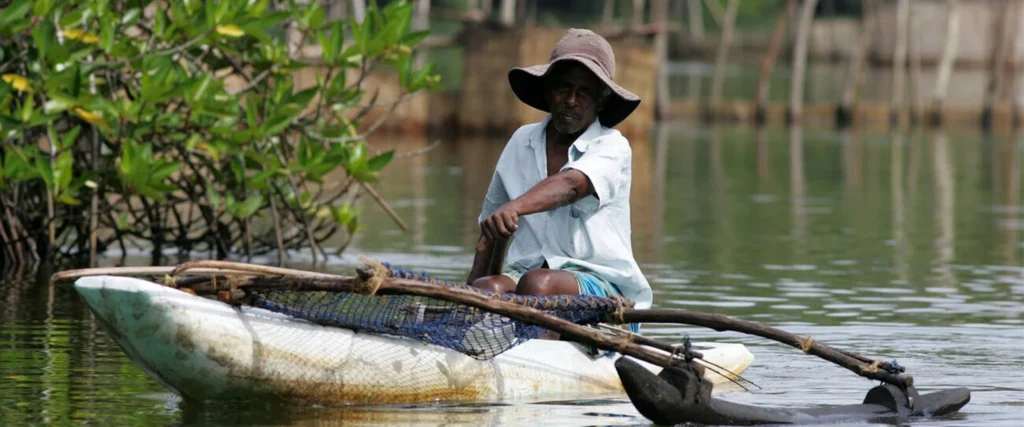
Most people picture a river as a single line you follow from one end to the other. The Madu River, known locally as the Madu Ganga, does not work that way. Near the coast it spreads into a lagoon system with two connected stretches of open water, the Madu Ganga itself and the smaller Randombe Lake, and the channels between them are lined with mangrove forest. The islands that sit in the water vary in size from a single shrine to a settlement with a few hundred people, and different sources count them differently, so you will see figures anywhere from a couple of dozen to over sixty. Whichever number you trust, the practical point is the same: this is a maze of water, not a straight run, and a boat is the only sensible way to see it.
The whole area is protected. It was designated a Ramsar wetland in 2003, and you can read the official record on the Ramsar Sites Information Service. The water here is an estuary, so salt water pushes in from the sea with the tide and mixes with fresh water coming down from inland. That mixing is what the mangroves like, and it is also why the mix of fish, birds and plants is richer than you might expect from a stretch of river you can cross in a few minutes. Our companion piece on what you can see on a Madu Ganga boat safari goes through the wildlife in more detail.
What makes the place feel different from a typical nature reserve is that people are part of it. Fishing families, cinnamon growers and monks all live along the water, and the boats you pass are working boats. If you are hoping for an empty wilderness, you may find this a little busier than you pictured. If you like trips where the scenery and the local life share the frame, it is one of the better half-days on the coast.
Where It Is and How to Get There
The safari starts in Balapitiya, a small town on the Galle road between Ambalangoda and Bentota. Our station, Madu River Safari by Buddhi, is on Elathota Road, a two-minute walk from Balapitiya railway station. Because the town itself has few places to stay, most visitors come from one of the nearby beach areas, and the drive is short from nearly all of them. From Ahungalla and Ambalangoda it takes about five minutes, from Bentota and Hikkaduwa about twenty, and from Galle Fort roughly forty. Colombo is around an hour and a half by road, and the international airport about two hours, so a day trip from the capital is realistic if you leave early.
A mix-up that catches many travellers is the Bentota River. It is a separate river, wider and closer to the large resort hotels, and plenty of operators there sell Bentota river tours that look similar on a brochure. The Madu River is the one with the mangrove channels and island stops, and it lies about twenty minutes south. If a booking says Balapitiya, you are in the right place. If you plan to see more of the coast, our list of things to do in Bentota and Galle shows what fits around the river. Our Location page has the map, parking details and the areas we can arrange transport from.
What a Madu River Boat Safari Is Like
The experience is gentler than the word safari suggests. You are given a life jacket, you step into a covered boat that holds a small group, and a rider takes you out onto the lake at an easy pace. For the first few minutes the water is wide and bright, with fishing boats in the distance and birds on the stakes that stick out of the shallows. Then the rider turns toward the shore, the channel narrows and the trees close in. In the narrowest places the branches of the mangroves meet overhead and the light turns green. The engine drops to a murmur, and people who were talking a moment ago often stop without realising it.
Between those quiet stretches the trip stops at a handful of places. The exact stops depend on the package and on how the day is going, and our Experiences page describes each one properly. The ones people mention most are the temple island, where a Buddhist temple sits on a piece of land you can only reach by boat, and the cinnamon island, where a family shows how the bark is cut, scraped and rolled, as we explain in our guide to how Ceylon cinnamon is made on Cinnamon Island. Many routes also pass the small island with a shrine, a fish farm where red tilapia nibble at your feet if you choose to try it, and in some cases the point where the river meets the sea. Nothing is rushed. If a bird is sitting on a branch, a good rider cuts the engine and lets the boat drift.
Because the boats are private, only your own group is on board. That matters more than it sounds. Some people like to talk to the rider and ask about the river, others prefer to sit in silence and take photographs, and on a private boat nobody has to wait for anyone else to get what they came for.
How Long Should You Allow?
This is the question we are asked most, and the honest answer depends on what you want to come back with. An hour on the water gives you a taste: the lake, a stretch of mangrove and one stop. That is fine if your schedule is tight or your children get restless, and our Express Boat Ride is built around it. An hour and a half starts to feel like a proper trip, with time for two stops and a longer look at the channels, and the Classic Boat Safari takes that route.
Two hours is the length we recommend to most first-time visitors, and it is what the Ultimate Mangrove Safari is designed around. At that length the rider can take the quieter channels without watching the clock, you can spend longer at the temple and cinnamon island and there is time to sit still when something interesting turns up. If you care about birds and soft light and are happy to be up early, the three-hour Sunrise Boat Safari goes out before the heat arrives. Whichever you choose, allow a little extra at either end for parking, a drink and getting settled, because the clock on your booking usually starts at the jetty.
Madu River Boat Safari Price
Prices for a private Madu River boat safari run from about twenty to sixty dollars per adult, mostly depending on how long you are on the water. Our shortest ride starts at $22 and the longest standard safari is $59, and the whole range, with child rates and a comparison of what each trip covers, is on our Madu River boat safari price and packages page. Those rates are private-boat prices, which means the cost is shared across your group rather than added on top by strangers.
When you compare offers from different operators, the headline number is the least useful part. It is worth asking whether the boat is private or shared, how much of the stated time is actually spent on the water, which stops are included and which carry an extra charge, and whether life jackets and insurance are part of the price. A trip that looks cheap on a roadside board can end up costing more once the extras are added, so ask for the total before you step on board. If anything is unclear, send us a message and we will explain our own package line by line.
When to Go
The time of day matters more than most visitors expect. Early morning, roughly between six and ten, is the best window. The water is calm, the air is cooler and the birds are busiest. Late afternoon is the second choice, when the heat drops and the light turns warm across the lake. Midday still works, because the channels are shaded and our boats have a canopy, but it is the hottest part of the day and the least pleasant for photographs. If one of those slots appeals, our Sunset Boat Safari is the one to look at.
The river works in every season, so there is no month you need to avoid or chase. This part of the coast has a tropical climate with no true dry season. Showers are usually short, the water inside the lagoon stays calm even when the sea is rough, and our boats run every day. A heavy downpour can occasionally cause a cancellation, so if you are travelling in a showery period, leave one spare day in your plans. We cover the seasons, the weather and what to pack in our guide to the best time to visit the Madu River, and you will find more on our main Madu River boat safari page.
What to Wear and Bring
Dress for a warm morning on the water and a short visit to a temple. Light clothes that dry quickly are the most comfortable, and a scarf or sarong you can pull over your shoulders and knees makes the temple stop easy. A hat, sunscreen and insect repellent are worth packing, particularly for the early morning and the hour before dusk. You will take your shoes off at the temple, so footwear you can slip on and off is handy. Keep your camera or phone in a small bag or pocket rather than hanging from your hand, and if you have binoculars, bring them. A little cash helps if you want to buy cinnamon products or tip the crew. You do not need to bring much else, and a small daypack is plenty.
Children, Older Travellers and Safety
Most people can manage a Madu River safari. The boats move slowly, the water is calm and the crew helps with getting on and off. We have no age limit on our regular tours, and life jackets are provided in a range of sizes, including for young children. Older travellers and anyone with limited mobility should mention it when they book so we can help at the jetty. The full details of how we look after guests are on our Safety & Comfort page, and we are registered with the Sri Lanka Tourism Development Authority.
The river is a protected place, and a few simple habits keep it that way. Do not feed or handle wild animals, however friendly they look, and be wary of any stop where animals are kept just for photographs. Take your rubbish back with you and keep your hands in the boat. We explain how we work on the river on our Sustainability page.
How to Book a Madu River Boat Safari
Booking is simple. Choose a package on the packages page, pick your date and number of guests, add your details and pay online to receive your confirmation. If heavy rain makes the trip unsafe, the safari may be cancelled, and you can reschedule or get a full refund. You can book on the day if a slot is free, but advance booking gives you your preferred time, particularly in busy periods. If you would rather talk first, our team is available on WhatsApp.